This Harry Potter Mirror of Erised activity is a fun way for your child to learn the steps it takes to turn a dream into reality.

In Harry Potter and the Philosopher’s Stone (the first book of the series), young Harry stumbles upon a mirror hidden in one of the rooms at Hogwarts. The mirror is said to show whomever is looking into it, their deepest desire. In his case, it was to see his departed family.
Desire tends to come pretty easy, instinctual even. We all have them and for all different reasons too. Knowing how to turn desire into actual accomplishment, however, tends to be more of a honed skill than a mindless act.
This activity helps children break down their dreams into easier manageable steps so they are achievable and almost tangible. So grab a pen, and a copy of the printable, and let’s get dreaming!
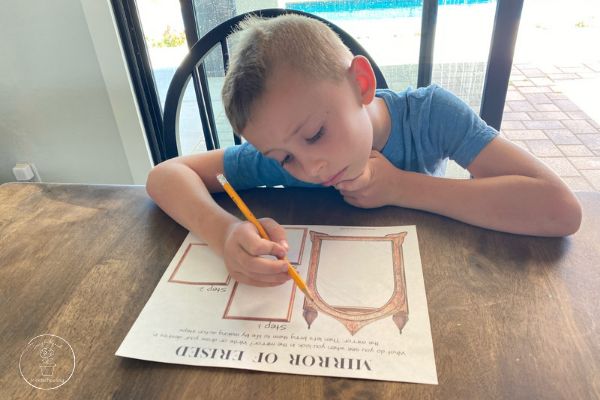
How to set up the Harry Potter Mirror of Erised activity
This activity is super easy and low maintenance! All you need are the supplies below! Let’s get started!
Supplies:
- Mirror of Erised Printable (get them below!)
- Pens, pencils, or markers of different colors
Instructions:
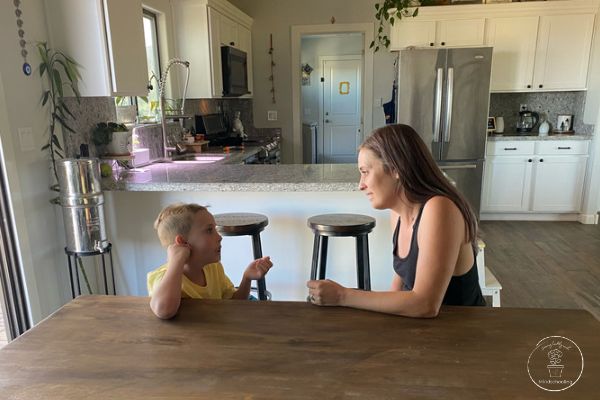
1. First, start a heart-felt, eye-to-eye conversation with your kiddo about what they dream about. What things do they want to see happen in the world, or to/for them? Some of their deepest desires. How do they want to show up in this world? What is something they long for? What do they want to know more about or be better at?
This is a great way to build connection, and trust and find out their passions and what drives them as well. It’s a great opportunity to get to know them as a person of their own and not just the child in the relationship. It is important for them to feel seen, heard, and understood.
The best learning happens with connection first!
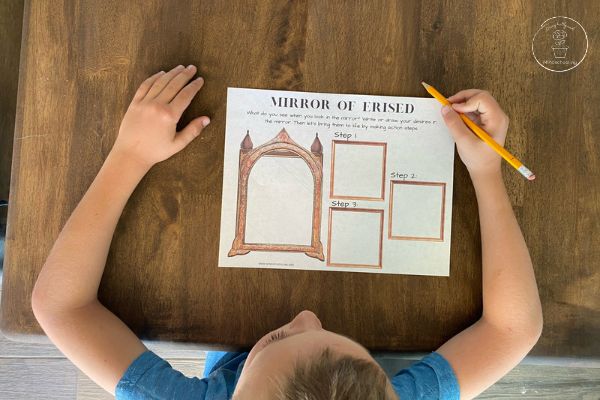
2. Present the printable to your child. Explain to them that just like in the book/movie, the mirror is where their dreams and desires are, so in the mirror boxes they can draw or write their goals. They can either do this one at a time or do all mirrors/dreams together and then do the steps to get them done. It’s totally up to them and what works for their brain organization!
3. Once you have the dreams and desires down, you can ask your child what they think the steps would be to get there. This gets written or drawn next to the mirror. These steps can be explored with questions like the following:
“What needs to happen for this to come true”, “Are there any tools or things you need for this to get done?” “Is there someone who might help me achieve my goal” or “What would you do right before {desire} happens?”. “Are there any problems that might pop up while trying to achieve the goal? If so, what are some solutions?”
This step might be the most difficult for the child. It may be hard for them to conceptualize breaking something abstract into smaller, semi-tangible bits. Especially if it is something they have never done before!
So offering guidance in a supportive and thought-provoking way, while also making sure the learning is happening organically and the conclusions are created by their ideas instead of ours, is essential. May be difficult but important.
If we offer the conclusions, we stop the neurons from firing and stop the creation of a path in the brain that can be traversed again and again in the future, which is what helps build this habit.
So if we interject an outcome for the child, even with the best intentions, it can make this skill even harder to achieve. Their neurons need to fire and forge the path to the conclusion so they know where the path is and how to access that ability again in the future.
It can also be difficult for a child if the goal/desire/dream they have is something they have never done before or currently know nothing about. It’s hard to know how to get something when you don’t even know what that something is.
If a child is stuck, you can offer support, without giving answers, by helping them break down a task they already know well. Getting pants on, for example. Help them see the similarities and what breaking a process down looks like. This will help them understand how to break down their desire into attainable actions.
You can say “Imagine your heart’s deepest desire is to put some pants on…” This will also get them giggling “…you can’t just want to have pants on and boom! You have pants on, right? There are steps to take to get them from the drawer in the other room and then onto your body. So let’s break that one down a bit….”
It’s okay to help with the steps a little more in the example, but still allow a chance for the child to try to figure it out first before answering. “…first, go to the room the pants are in. Next, go to the dresser/closet. Next, open the drawer/find the pants. Pull the pants out of the drawer and then hold them next to your feet. Next, put one foot in, all the way in. Then the other foot. Now pull them up. Last, button/zip/snap them closed.”
This should help them see the path or the steps to take to make a dream attainable.
4. Discuss how the actions to reach the goals might change, especially if the dream is something they have never done or currently know nothing about right now.
If this happens you can explain to the child that adjusting the steps to the dream is what will keep it attainable. Explore with them, breaking the steps into smaller, less intimidating steps.
As in our earlier example, we could have said, to open the drawer with the pants and grab them, then the next step would be to put your leg in them. But they are holding the pants too high to get their foot in and will fall. Breaking the steps into smaller, much more detailed versions will end more successfully, and with pants on!
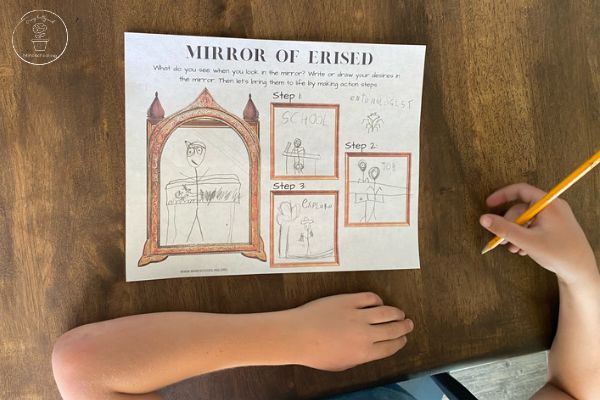
5. Then hang up the printable somewhere the child can see it and be inspired every day by their growth, tenacity, their hard work, their persistence, and their achievements. If the child does not want to hang it up, obviously that is perfectly fine too!
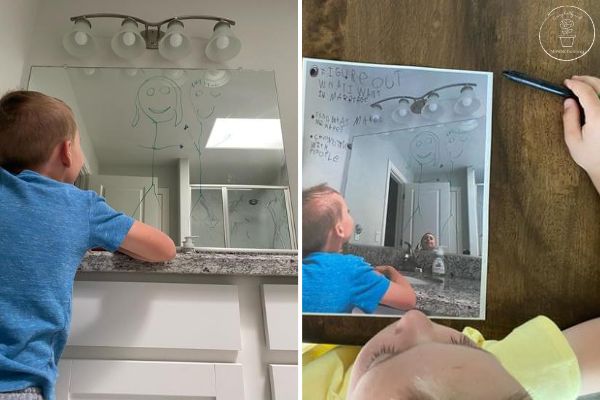
If your child doesn’t like to do worksheets or printables, you can do this activity while sitting in front of a mirror, or by giving each child a large handheld mirror and inviting them to write or draw on the mirror using dry-erase markers instead of the paper.
There is just something fun about writing on mirrors that kids love! This works for windows too, for other activities. Plus taking the writing surface vertically helps with visual tracking, muscle control, pencil grasp, eye convergence, and more! It can also help children who need to move while learning and help with fidgeting.
Don’t forget to get a picture of the child holding the mirror with their dreams and goals. You can print this out and invite the child to draw the steps necessary to reach their goals or write on the picture for them what their steps are to accomplish the dreams they have.
If your kiddos are enjoying learning about themselves while exploring the magical world of witchcraft & wizardry, and they want more, you can grab all 8 of our Harry Potter mindfulness printables for just $1.29!

(If you just want the free file, feel free to go to the individual posts to grab to grab them. It will ask you to enter in your information for each activity printable, but don’t worry, I won’t send you duplicate emails.)
Social Emotional Learning Behind the Harry Potter Mirror of Erised Activity
Setting goals, stating dreams, and exploring desires are all very important skills to know. These skills are shown to help with consistency, confidence, productivity, motivation, resiliency, and more!
Consistency, even with oneself, is also a large part of one having confidence and self-worth. Knowing you can rely on yourself no matter what builds self-trust, self-respect, and an understanding that you can accomplish anything!
Having consistency helps the brain to not have to worry about the newness that is happening, or what happens after this new thing, or what could go wrong; and instead relax into creativity, productivity, and flow.
Resiliency comes from goal setting. When a hurdle comes up halfway to the goal after all the work you already put in, instead of giving up, you learn to pivot, make smaller steps to the goal, and bring that desire into reality anyway. You learn to not let one hiccup stop you from achieving your dreams.
So it’s pretty easy to see how important it is to learn how to give ourselves purpose and our actions meaning and direction with goals. Without dreams and directions on how to achieve them, we are lost.
Many studies and papers have been done on the benefits of goal setting and its positive psychological impacts. Articles like this or this, also show the benefits of goal setting and flexibility through setbacks, and why it is so very important for our happiness as well as our success.
That’s exactly why I created this activity. To give children a fun, engaging, and lasting way to use a tool for goal setting and turning their dreams into reality, so they can grow into all they want to be!
Empowering your kids to get up, set their goals, and turn their dreams into reality is a gift they will use their entire lives. As the wise Professor Dumbledor said, “It matters not what someone is born, but what they grow to be.”
Check out these other Harry Potter Social Emotional Learning Activities:
- Harry Potter Remembrall Activity – Positive Mindset
- Harry Potter Sorting Hat Activity – Character Building / Self Acceptance
- Harry Potter House Crest Activity – Self Affirmation
- Harry Potter Transfiguration Activity – Flexible Thinking & Growth Mindset
- Harry Potter Boggart Activity – Facing Fear & Defeating Worry
- Harry Potter Marauder’s Map Activity – Self Care / Authenticity / Safety
- Harry Potter Defeat Voldemort Activity – Confidence / Defeating Fear